
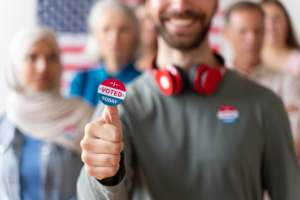
Founded in 1828, the Democratic Party is one of the major political parties in the United States. The other major political force is the Republican Party.
The party’s official symbol is a donkey. It generally advocates for liberal policies like civil rights protection, better healthcare access, and social welfare programs.
To win elections, the party uses a certain way of selecting candidates and campaigning that we’re going to mention in this article. Let’s get started.
Selection of Candidates and Primaries
First and foremost, the Democrats must select their own candidates to compete in the election. It is done through internal party contests. But how is it done?
It varies state state. But in most states, registered voters cast secret ballots to choose a nominee. Some states also use only registered Democrats to vote, whereas others use open primaries where independents can also participate.
Party members also gather to debate and vote for the candidate of their choice. For presidential races, pledged delegates are also awarded to candidates based on a 15% minimum vote threshold.
Management of Democratic Campaign Election
The Democratic Party uses a combination of messaging and grassroots organizing to manage the campaigns and ultimately win elections. To mobilize voters, Get Out the Vote (GOTV) campaigns are launched, encouraging people to change their lives voting. They use mail-in ballots, door-knocking, and phone banking to raise awareness.
During the Democratic campaign election, the party builds coalitions targeting diverse electoral groups. They focus on urban centers, young voters, and even minority communities to gather enough support.
The campaigns generally highlight the party’s philosophy on how governance can be improved. The core policy debates usually revolve around healthcare access, social equality, and public education funding.
How Electoral Infrastructure Is Managed
The Democratic Party relies on its strong network of committees to fund electoral campaigns. For example, the Democratic National Committee oversees the presidential platform and national strategy. The DSCC focuses on Senate elections, whereas the DNCC targets the U.S House races.
Similarly, on a regional level, individual state parties manage ballot access. Precinct committees handle local grassroots work. In rural areas, different organizations recruit and support the democratic candidates.
There are also supervisory committees that analyze whether the recruitment is being done carefully. They can instantly point out if something is going wrong.
What Happens During the Polling Days
The party shifts its focus from active campaigns to voter mobilization on the polling day. Volunteers join the party and then cross-reference polling records to see which supporters still have not voted. The workers also remind supporters through text messages and phone calls to head to the polls.
Party workers also offer free transportation to the elderly or isolated voters. The goal is to ensure that everyone can easily reach the polling station.
The parties also set up camp offices outside the legal boundary of the polling stations (within 200 meters).
Final Thoughts
The party is well organized, and its discipline is reflected in every part of its campaign process.